













What We Learned, What Leaders Asked, and Where SMBs Go Next!
Stratégies PME 2025 proved one thing: Québec SMBs are taking cybersecurity seriously. Decision makers want clarity on cyber-insurance, managed service providers (MSPs), mergers and acquisitions (M&A), and Law 25. This article recaps Fusion Cyber’s experience at the event and answers the questions we heard most.
Thank You, Stratégies PME
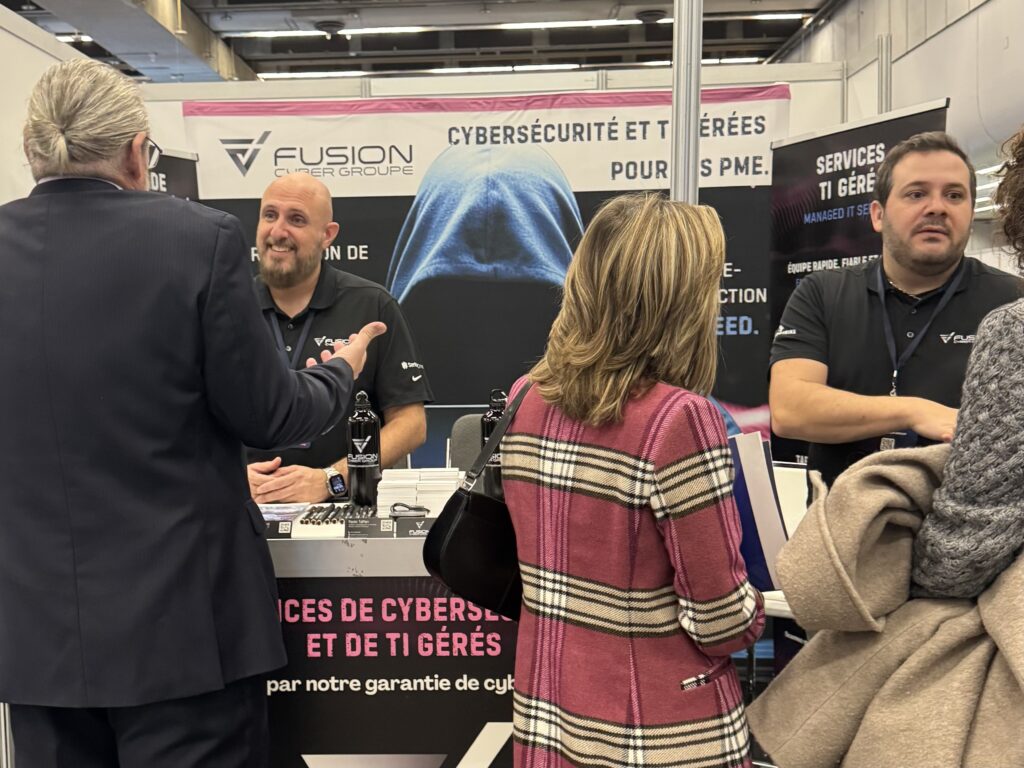
We spent Tuesday November 11th and Wednesday November 12th meeting leaders from every industry—manufacturing, accounting, human resources, legal services, and more. The conversations were practical, honest, and focused on real-world business pressures.
Thank you to everyone who visited our booth, attended our discussions, and shared their challenges. Your questions help us build better solutions and keep Québec businesses safer.
Cyber-Insurance: Everyone Wants Coverage, But Few Know What Insurers Now Expect
One of the loudest themes at the event was insurance. Many leaders approached us with the same underlying worry: “How do we make sure the insurer covers us if something goes wrong?”
The reality is that cyber-insurance has changed. Five years ago, you could fill out a questionnaire, pay the premium, and hope for the best. Today, insurers are reacting to record-breaking cyber losses. They now expect businesses—large or small—to demonstrate strong controls, not just claim they have them.
We walked many visitors through what insurers now check for: multi-factor authentication (MFA), endpoint detection and response (EDR), 24/7 security monitoring, proper backups, and evidence that the business actually enforces its policies. Several leaders were surprised to learn that a claim can be denied even if the business thought it had the right controls but wasn’t applying them consistently.
The message resonated: investing in cybersecurity is now the fastest way to reduce insurance premiums, avoid policy exclusions, and ensure the insurer actually pays out when needed. Strong controls protect the business, but they also protect the claim.
Working With an MSP: What Actually Changes for Management Teams
A second major theme was the shift that comes with engaging an MSP or MSSP (managed security service provider). Many teams wanted to understand what they keep, what they delegate, and what the day-to-day feels like once an external partner is involved.
We told leaders what we’ve seen over decades of experience: bringing in a managed provider doesn’t cause a loss of control—it creates structure. Executives get clearer reporting, cleaner accountability, and fewer surprises. Internal IT teams stop firefighting and start focusing on strategic work the business has been putting off for years. Decision makers gain predictability around budget, incident response, and project timelines.
What often surprised visitors was the idea that incentives matter. A strong MSP/MSSP partnership isn’t about buying hours of labour. It’s about paying for outcomes: security, uptime, compliance, and resilience. When expectations are defined clearly, the partnership reduces stress for leadership rather than adding complexity.
M&A Conversations: Buyers Want Assurance, Sellers Want Leverage
Another trend that stood out at Stratégies PME was the number of conversations from businesses involved in mergers, acquisitions, or succession planning. Cybersecurity has become a standard part of due diligence. Buyers want to know what they’re taking on, and sellers want to avoid last-minute price adjustments caused by undiscovered risks.
We walked several executives through how cybersecurity assessments directly influence valuations. A clean security posture speeds up deals. A messy environment slows them down or forces negotiations to start over. For private equity, family offices, and consolidators, cybersecurity is no longer optional—it’s an efficiency tool. It creates confidence in integration planning, protects sensitive data during the transition, and reduces the chance of inheriting expensive liabilities.
For SMB owners who plan to sell in the next 3–5 years, this topic hit home. Many said they now see cybersecurity not only as protection, but as a value multiplier.
Law 25: The Law Is Fully in Force, and Business Leaders Want Straight Answers
Law 25 generated constant questions—so many that it became clear many SMBs still don’t know exactly what they must do to comply. Some leaders believed the law only applies to enterprises. Others thought compliance could wait until a future phase. Both assumptions are incorrect.
Throughout the event, we focused on giving leaders a simple, grounded explanation. Every Québec business that collects, stores, or shares personal information must comply. That includes small retail stores, health-service providers, accounting firms, professional services, manufacturers, nonprofits—everyone.
The responsibilities are clearer than most think: appointing a privacy officer, documenting what personal information the business holds, protecting that data with appropriate safeguards, disclosing breaches, conducting privacy impact assessments when adopting new technologies, and respecting retention and destruction rules. For many SMBs, the first step is understanding what personal data they actually have, where it lives, and who can access it.
The relief was noticeable when leaders realized that they don’t need a perfect program on day one—they need a roadmap and evidence of progress.
What These Conversations Say About the State of Québec SMB Security
Across both days, one thing became obvious: cybersecurity is no longer a technical expense. It’s a financial risk, an operational dependency, and a legal obligation. SMBs are now asking business-focused questions:
- “How do we protect revenue?”
- “How do we qualify for insurance?”
- “How do we avoid downtime?”
- “How do we stay compliant?”
- “How do we avoid surprises during an audit or acquisition?”
These are the right questions. They reflect a market that is maturing quickly and leaders who want clarity, not complexity.
At Fusion Cyber, our goal remains unchanged: deliver enterprise-grade security at prices SMBs can sustain. Our financially backed Cybersecurity Guarantee strengthens that promise—when clients fully onboard to our stack, we take responsibility for outcomes, including incident response, containment, and recovery at our expense.
Stratégies PME gave us a clear mandate from the business community: keep security simple, cost-effective, and aligned to real-world business risk.
Thank You to Everyone Who Joined Us
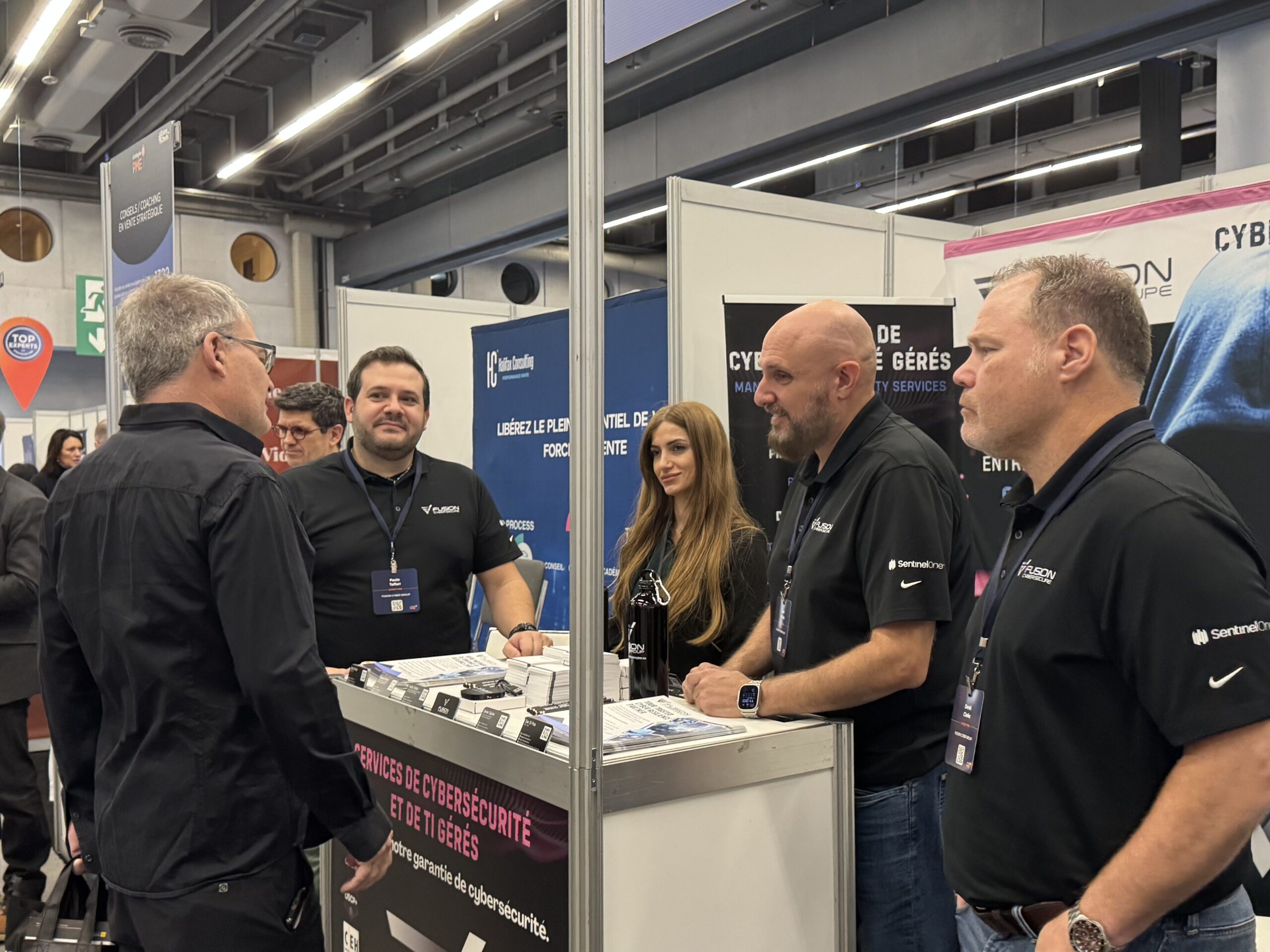
To every leader who shared their challenges, to every team who asked tough questions, and to every business looking to secure their future—thank you. Your engagement pushes us to continue raising the bar for managed security across Québec.
If you met us at the booth and want to continue the conversation, or if you missed us and want guidance on insurance readiness, MSP transitions, M&A preparation, or Law 25 compliance, we’re here to help.
About Fusion Cyber: Why More SMBs Are Turning to Us
As conversations at Stratégies PME made clear, businesses want partners who reduce risk without increasing complexity. Fusion Cyber was built for that exact purpose. We combine a 24/7/365 Security Operations Centre with managed detection and response, advanced threat hunting, vulnerability management, email and endpoint protection, Zero Trust controls, and full backup and recovery for Microsoft 365 and Google Workspace.
Our team holds CEH, PNPT, OSCP, CISSP, and CISA certifications. We operate using the MITRE ATT&CK framework and the Lockheed Martin Cyber Kill Chain. But what matters most for SMBs is the outcome: we deliver enterprise-level security in a format that small and mid-sized teams can actually sustain.
A major point of interest at the event was our financially backed Cybersecurity Guarantee. Fully onboarded clients who follow our recommended stack get a commitment that sets us apart: if a breach occurs, we handle incident response, containment, and business recovery at our expense. This aligns our incentives directly with our clients’ outcomes—no surprises, no finger-pointing, and no inflated emergency bills.
We also support clients navigating M&A, privacy compliance, and insurance renewal cycles. Our approach is simple: clear reporting, measurable improvement, predictable budgeting, and controls designed to pass real-world audits.
For SMBs facing rising cyber risk, stricter privacy laws, and tighter insurance requirements, we aim to be a partner that delivers clarity, stability, and peace of mind.
Featured links:
FAQ:
What does an insurer actually verify before approving cyber-insurance?
Insurers now require proof of core security controls: multi-factor authentication (MFA), endpoint detection and response (EDR), 24/7 monitoring, secure backups, and documented incident response processes. They also review how access is managed and whether policies are enforced, not just written down. Businesses that lack these controls often see higher premiums, exclusions, or outright refusals.
If we already have internal IT, why do we need an MSP or MSSP?
Internal IT teams are essential, but they’re not designed to provide 24/7 defence, threat hunting, or compliance-level reporting. An MSP/MSSP adds structure, monitoring, and security operations so internal teams can focus on strategic projects, planning, and user support. It’s not about replacing IT, it’s about giving them the tools and capacity to protect the business properly.
How does cybersecurity impact a merger, acquisition, or company sale?
Cybersecurity is now part of standard due diligence. Buyers want certainty that they’re not inheriting hidden liabilities, outdated systems, or regulatory risks. A strong security posture can raise valuation and speed up the deal. A weak one can delay or reduce it. Both buyers and sellers benefit from assessments, remediation plans, and clear documentation before formal negotiations begin.
What does Law 25 require from SMBs in practical terms?
Law 25 applies to all Québec organizations that handle personal information. SMBs must appoint a privacy officer, document personal data flows, enforce access controls, protect data with modern safeguards, disclose breaches, perform privacy impact assessments when introducing new tools, and follow retention and destruction rules. Compliance is achievable with the right roadmap—it doesn’t require perfection, but it does require action and proof.
Our Cybersecurity Guarantee
“At Fusion Cyber Group, we align our interests with yours.“
Unlike many providers who profit from lengthy, expensive breach clean-ups, our goal is simple: stop threats before they start and stand with you if one ever gets through.
That’s why we offer a cybersecurity guarantee: in the very unlikely event that a breach gets through our multi-layered, 24/7 monitored defenses, we will handle all:
threat containment,
incident response,
remediation,
eradication,
and business recovery—at no cost to you.
Ready to strengthen your cybersecurity defenses? Contact us today for your FREE network assessment and take the first step towards safeguarding your business from cyber threats!