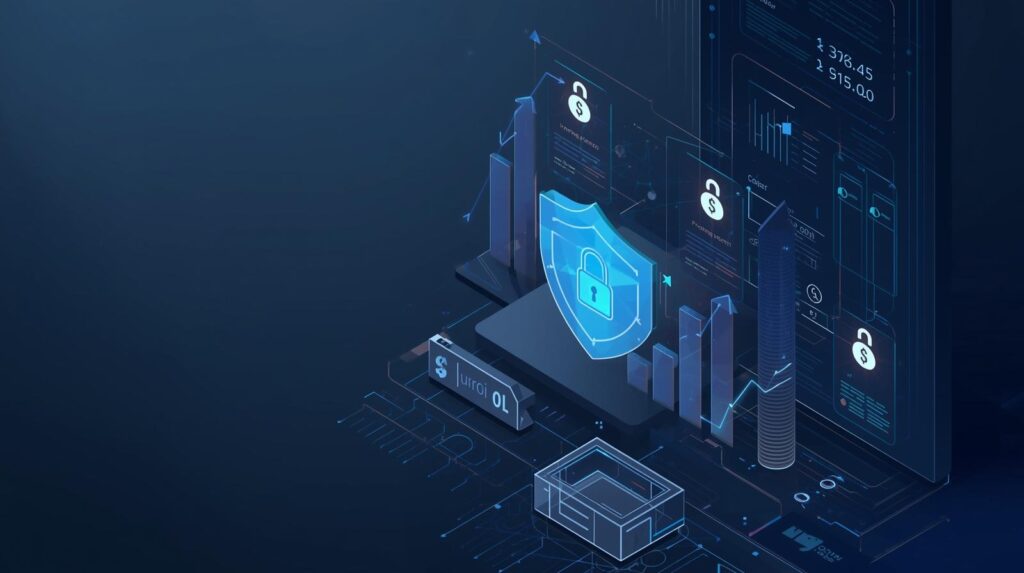








Your data is your business. If attackers get into your systems, strong data-layer controls keep stolen files unreadable, limit legal exposure, and help you recover fast
What the “data layer” means
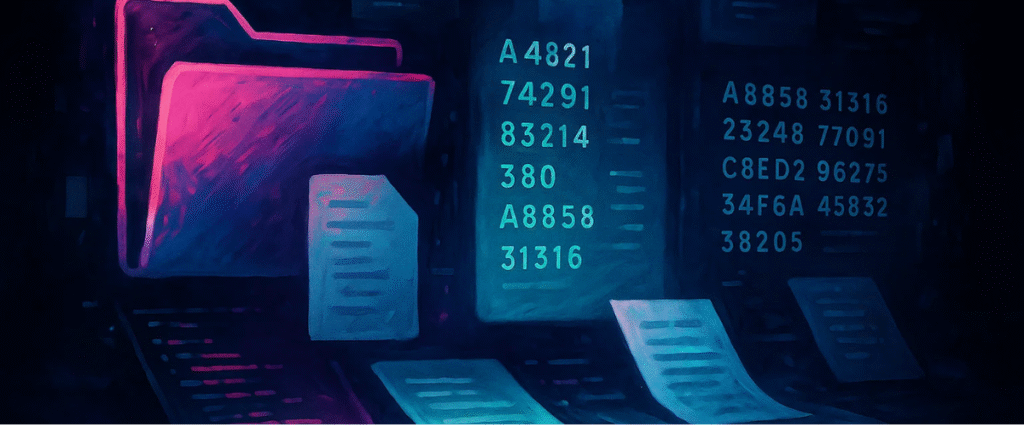
The data layer focuses on the information itself—wherever it lives or travels. In practical terms, that means the spreadsheet an accountant saves on a laptop, the customer table inside a production database, the invoice PDFs synced to a cloud drive, and the attachments or API payloads moving between systems, partners, and people. It also includes archives and backups—onsite appliances, cloud object storage, or old-but-reliable tape—because those copies often outlive the systems that created them.
Crucially, the data layer spans all states of data: at rest on disks, in motion across networks, and “in use” when users open, query, or transform it in applications and analytics tools. If you can name the record type—payroll, pricing, contracts, designs, source code, support logs—it belongs to the data layer.
Thinking in terms of a data layer forces you to follow information through its lifecycle: creation, storage, use, sharing, archival, and disposal. Along that journey, data multiplies through temporary files, caches, screenshots, exports, and email threads. It hops across devices (laptops, phones), platforms (SaaS apps, ERP/CRM), and locations (branch offices, home networks, cloud regions). Copies appear in places you didn’t plan—collaboration channels, personal drives, or vendor portals—introducing risk if controls don’t travel with the data. That’s why modern protection emphasizes controls that bind to the information itself (encryption, sensitivity labels, rights management), not just the boxes it sits in.
The data layer also includes the metadata that gives information business meaning: who owns it, why it exists, how sensitive it is, who may use it, and how long it should be kept. A simple classification—Public, Internal, Confidential, Regulated—lets non-technical staff make good choices quickly. From there, policy can require stronger safeguards (e.g., encryption, data loss prevention) for higher-sensitivity classes and automate retention or legal hold for regulated records. When ownership is clear and labels are consistent, access reviews and audits become straightforward, and teams can prove compliance without slowing the business.
Most important, the data layer is where outcomes are won or lost. Networks can be bypassed and endpoints can be compromised, but if sensitive files remain unreadable to adversaries and recoverable to you, the business keeps operating, customers retain trust, and legal exposure stays contained. Treat the data as the asset to defend—independent of any one system—and you gain durable control that survives platform changes, growth, and even incidents.
Why the data layer matters to SMB leaders

Encryption turns readable data into ciphertext so intercepted packets are useless to attackers. Done well, it protects confidentiality and integrity without slowing the business. Modern TLS 1.3 negotiates faster, removes legacy weaknesses, and uses forward-secure key exchanges so even a stolen server key can’t decrypt past sessions. For private links between sites and clouds, IPsec applies consistent, policy-driven protection at the network layer.
Leaving any service on HTTP, Telnet, old TLS, or other plaintext creates easy wins for adversaries. Coffee-shop Wi-Fi, shared office networks, and unmanaged home routers are fertile ground for man-in-the-middle attacks that lift passwords and session cookies. Beyond technical fallout, weak crypto fuels contract disputes, regulatory headaches, cyber-insurance friction, and reputational harm that’s hard to repair.
For web apps and APIs, enforce HTTPS everywhere with TLS 1.3 and modern cipher suites, and enable HSTS so browsers refuse to downgrade. Redirect all HTTP to HTTPS, disable weak ciphers and obsolete key exchanges, and test regularly. These simple moves eliminate accidental plaintext and block common downgrade attempts.
Email deserves equal attention. Require STARTTLS and MTA-STS for server-to-server transport, sign outbound mail with DKIM, and monitor DMARC reports to spot spoofing and configuration drift. Stronger mail transport and authentication measurably reduce credential theft and invoice fraud.
Between offices, data centres, and VPCs, standardise on IPsec/IKEv2 using AES-GCM with Perfect Forward Secrecy. Hardware acceleration on modern firewalls keeps throughput high while maintaining consistent encryption across every tunnel. For user access, consider pairing site-to-site IPsec with ZTNA for per-application connectivity.
Certificates should be run as a product, not a project. Centralise issuance, rotation, and revocation; automate with enterprise PKI or ACME; enable OCSP stapling; and track ownership and expiries. Replace self-signed certificates, ensure SANs match real hostnames, and set alerts so renewals never become a 2 a.m. outage.
Lock down legacy everywhere. Disable SSLv2/3 and TLS 1.0/1.1, retire FTP and Telnet in favour of SFTP and SSH, and harden Wi-Fi with WPA3-Enterprise (or WPA2-Enterprise with strong EAP) to protect local radio traffic. These are low-effort, high-impact changes.
Make it routine. Scan for plaintext protocols internally and externally; anything found gets upgraded, wrapped in TLS, or blocked. Bake TLS checks into CI/CD to catch regressions before deployment. A network or security admin should own the policy, review cipher suites quarterly, check certificates weekly, rotate keys per policy, and time-box any exceptions with a clear path to full compliance.
Common SMB pitfalls we see

- “Everyone” file shares. Shared folders often start tidy and then sprawl as teams grow, projects change, and contractors come and go. Permissions get copied forward, inheritance piles up, and no one wants to break access before a deadline. The result: payroll exports beside marketing assets, discoverable by any employee—or former vendor accounts that were never removed.
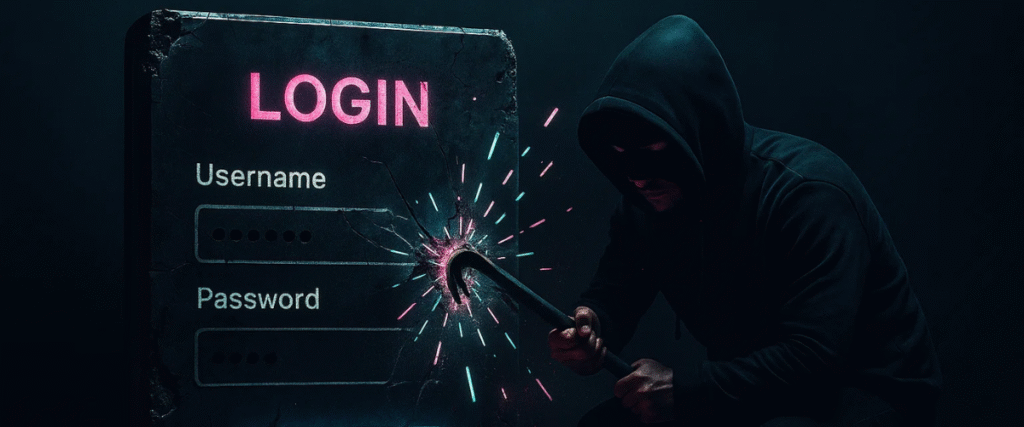
- Backups joined to the domain. When backup servers and repositories trust the same Active Directory or Entra ID as production, ransomware needs only one set of credentials to destroy both. We routinely see domain-admin service accounts on backup consoles, flat networks with no segmentation, and no multi-factor authentication (MFA). In an incident, your “last resort” becomes the attacker’s first target.
- Shadow sprawl. Sensitive material escapes sanctioned systems through personal cloud drives, USBs, messaging apps, and ad-hoc exports for “quick” analysis. Screenshots and offline copies linger on home laptops and mobiles. Expired share links still work; external guests retain access long after a project ends. Without central visibility, you can’t revoke access, discover exfiltration, or meet legal hold obligations.
- No classification. When nothing is labelled, everything is effectively public—or treated as secret at random. Staff guess based on who sent the file, not what’s inside. Over-classification stalls collaboration; under-classification causes leakage. Without named data owners and four plain labels (Public, Internal, Confidential, Regulated), policies can’t adapt—auto-labelling, DLP rules, and retention never trigger reliably.
- Unproven recovery. “We back up” is not the same as “we can restore.” Teams discover too late that backups aren’t application-consistent, RPO/RTOs don’t match business tolerance, cloud throttling drags restores, or critical dependencies (DNS, identity, licences, keys) weren’t captured. Missing runbooks and untested SaaS backups turn a containable outage into prolonged downtime and reputational damage.
Read More about the 7 Layers of Cybersecurity
Technical guardrails and patterns
Encryption at rest
Treat full-disk encryption as non-negotiable on every laptop and phone, with enforcement through your device management platform and a clear lost/stolen device process. Require strong PIN/biometric plus the ability to revoke keys remotely. On servers and virtual machines, encrypt all volumes and add application-level protection for the most sensitive elements—think column-level or field-level encryption for Social Insurance Numbers (SIN), payroll data, card tokens, or health notes.
This layered approach prevents an attacker who gains low-level disk access—or a rogue admin with storage permissions—from reading cleartext. Keep encryption keys away from the data they protect: use a hardware security module (HSM) or cloud key management service (KMS), enforce dual control for key changes, and rotate keys on a defined schedule. Limit who can export or disable keys, log every key operation, and back up key material safely so you can still decrypt after a disaster without weakening security.
Encryption in transit
Standardise on TLS 1.2 or higher and prefer TLS 1.3 for modern cipher suites, faster handshakes, and better defaults. Disable legacy protocols and weak ciphers everywhere, including internal services—attackers love “inside the firewall” exceptions. Use certificates from a trusted CA, automate renewal to avoid expiry outages, and enable HTTP Strict Transport Security (HSTS) on web apps. For APIs that move sensitive records between systems or partners, require mutual TLS (mTLS) so both client and server authenticate each other. Document a hardening baseline aligned to recognised guidance and verify it with scheduled scans so drift doesn’t reintroduce risk.
DLP everywhere
Start where people share the most: email and cloud storage. Turn on built-in data loss prevention (DLP) policies to detect Canadian identifiers (e.g., SIN patterns) and financial or health terms, and begin with coaching—pop-up tips that warn users before an accidental overshare. Once false positives are tuned down, move high-risk flows (external email, public links) to block or quarantine.
Extend coverage to endpoints to monitor clipboard, USB copy, print, and screen capture, with exceptions for approved business tools. Pair DLP with clear labelling—Public, Internal, Confidential, Regulated—so rules can act on sensitivity consistently. Report trends to managers and reward teams that reduce repeat violations; positive reinforcement changes behaviour faster than surprise blocks.
Backups and ransomware resilience
Assume ransomware will try to find and encrypt your backups first. Apply the 3-2-1 rule rigorously—three copies, two media, one off-site—and add immutability or an offline/air-gapped tier that malware cannot modify. Remove domain trust from backup repositories and consoles, use unique admin identities with MFA, and prune standing privileges so no single credential can delete everything. Practice restores as seriously as incident response: rehearse a clean-room recovery, measure recovery point (RPO) and recovery time (RTO) against business targets, and document gaps. Test application-consistent restores (databases, ERP, email), not just file copies, and ensure critical dependencies—identity, DNS, licences, encryption keys—are included in your recovery plan.
Cloud data governance
Treat SaaS and cloud storage as part of the same data layer, not an exception. Classify information where it’s created, apply sensitivity labels that travel with files, and enforce tenant restrictions to stop unmanaged accounts from becoming silent exfiltration paths. Use least-privilege roles, turn on detailed access logging, and review external sharing on a schedule.
Align control strength to data sensitivity and business impact: some workloads may justify customer-managed keys, private connectivity, or region pins to meet residency expectations. Automate retention and legal hold policies for common record types, and validate that third-party apps connected via API respect those rules. Finally, publish a short cloud governance standard that product owners can follow without calling security—clarity beats tribal knowledge every time.

Compliance context for Canadian SMBs (PIPEDA essentials)
Safeguards are mandatory.
PIPEDA’s Principle 7 expects safeguards that match the sensitivity of the information and the likelihood and severity of harm if it’s compromised. Think in layers: physical (locked rooms, clean desk), organisational (policies, training, need-to-know access), and technological (encryption, MFA, DLP, logging). Accountability also extends to your vendors—cloud providers, payroll processors, marketing platforms—so contracts must require equivalent safeguards, incident notice, and cooperation during investigations. Cross-border processing is permitted under PIPEDA, but you remain responsible for protection and transparency; tell individuals if their data will be stored or accessed outside Canada and why. Periodic risk assessments and access reviews demonstrate that safeguards aren’t just written—they’re working.
Limit use, disclosure, and retention.
Principle 5 ties everything back to purpose: collect only what you need, use it for the stated reason, and dispose of it when that purpose ends. Retention schedules should define how long each record type stays in production systems and backups, then mandate secure destruction (crypto-erase, shredding, certified disposal). Legal holds pause deletion when litigation or investigations are reasonably anticipated, and your systems must be able to honour that pause without losing control of versions. Map each data class to a retention rule, owner, and disposal method so teams don’t guess. Clear timelines also reduce e-discovery volume and storage costs.
Breach reporting.
When an incident creates a “real risk of significant harm,” you must notify the Office of the Privacy Commissioner (OPC) and affected individuals as soon as feasible, and you must maintain a breach log. Practically, that means having a playbook to assess sensitivity, the probability of misuse, and mitigating controls (e.g., encryption). Keep breach records for every incident—even near-misses—and be prepared to share them with the OPC on request. Notify third parties (like institutions or service providers) if they can help reduce harm. Finally, remember that some provinces add extra obligations (e.g., Quebec’s Law 25); align to the strictest rule that applies to your operations.
These outcomes come naturally when you strengthen the data layer with encryption, classification, DLP, resilient backups, and tested recovery.
Conclusion
Protecting the data layer is the most direct way to reduce breach impact, satisfy Canadian privacy obligations, and keep your business running. Start with simple classification and encrypt everything sensitive. Put DLP where people work. Design backups that ransomware can’t alter. Then prove recovery with regular restore drills. In 90 days, your risk profile will look very different—and far better.
Make this a leadership priority with a clear cadence and visible measures. Set targets for encryption coverage, eliminate broad “Everyone” access, and track restore outcomes against your recovery time and recovery point objectives. Treat quarterly restore drills like fire drills—planned, brief, and repeatable—so recovery steps become muscle memory instead of improvisation. Build a culture where labels and secure sharing are default behaviours: short micro-trainings, simple job aids, and team champions will move the needle faster than long policy documents. Align retention to purpose, document exceptions, and ensure your contracts expect the same from partners who touch your data. The payoff isn’t just lower risk; it’s operational clarity, audit readiness, and stronger customer trust in competitive sales cycles.
You don’t have to do it alone. If you want guidance, coaching, or an outside perspective to validate decisions and maintain momentum, Fusion Cyber can partner with your team at each step—helping you keep the program pragmatic, measurable, and tuned to your business constraints. Start small, show proof, and expand—one labelled dataset, one successful restore, one confident executive update at a time.
Your information is the business. We’ll help you protect it end-to-end and recover fast when it matters.
Featured links:
Compliance & Regulations for Canadian SMBs
OPC: Report a Privacy Breach at Your Business
Canadian Centre for Cyber Security: ITSP.50.103
FAQ:
We have backups—why focus on immutability?
Modern ransomware targets backups. Object-lock/immutable storage and offline copies prevent tampering, making restores reliable. Follow 3-2-1 and test.
How does this tie to PIPEDA?
PIPEDA requires safeguards and appropriate retention. Classification, encryption, DLP, and retention policies implement these principles in daily operations.
What should our RPO/RTO be?
Set them by business tolerance. For sales/ERP, you might aim for RPO ≤ 4 hours and RTO ≤ 8 hours; for less critical systems, longer may be acceptable. Test and adjust.
Who owns classification?
Business data owners define labels and sharing rules; IT enforces through tooling; leadership sponsors and audits. Keep labels lightweight and practical.
SITUATION
SMBs run on data scattered across laptops, SaaS apps, clouds, and backups. Privacy rules expect safeguards, and customers expect you to keep their information safe and recoverable.
COMPLICATION
Organic growth leaves “Everyone” shares, domain-joined backups, and unlabeled files.
QUESTION
How can leaders protect the information itself—without slowing the business—so stolen data is unreadable and recovery is routine?
ANSWER
Treat the data layer as a program: classify information simply , encrypt at rest and in transit, put DLP where people work, enforce role-based access, and design 3-2-1 immutable backups you test quarterly.
Our Cybersecurity Guarantee
“At Fusion Cyber Group, we align our interests with yours.“
Unlike many providers who profit from lengthy, expensive breach clean-ups, our goal is simple: stop threats before they start and stand with you if one ever gets through.
That’s why we offer a cybersecurity guarantee: in the very unlikely event that a breach gets through our multi-layered, 24/7 monitored defenses, we will handle all:
threat containment,
incident response,
remediation,
eradication,
and business recovery—at no cost to you.
Ready to strengthen your cybersecurity defenses? Contact us today for your FREE network assessment and take the first step towards safeguarding your business from cyber threats!