











We unpack the business case for unifying security and IT: fewer incidents, clearer evidence for clients and insurers, lower total cost, and a roadmap that scales as your teams and projects grow.
Professional services run on trust, time, and talent. When your people can work without interruption, your projects move, and your clients stay happy. When systems lag, credentials leak, or ransomware locks files, the business stalls. Revenue suffers. Reputation suffers. Client relationships suffer.
In professional services (engineering, architecture, consulting), technology and security are critical to success. Businesses in this sector depend on reliable IT systems and robust cybersecurity to operate effectively, protect sensitive data, and maintain trust. A disruption—whether from a cyberattack or system failure—can cause major operational, financial, and reputational harm.
Fusion Cyber Group delivers a complete solution by combining the strengths of a Managed Security Service Provider (MSSP) and a Managed Service Provider (MSP), giving you both proactive protection and dependable IT management under one roof. We bring enterprise-grade defences and disciplined operations to firms of 5–250 employees, priced and right-sized for SMB realities.
The Technology & Security Challenges in Professional Services

Project-driven work, relentless deadlines
Engineering, architecture, and consulting organizations live by schedules. Project plans, submittal deadlines, and milestone reviews create constant pressure. A 30‑minute outage during a deadline crunch feels like hours. Interruptions ripple across drafters, analysts, and project managers.
Client confidentiality and intellectual property (IP)
Your data includes designs, models, simulations, financials, and strategic plans. Some are protected by NDAs; others are subject to privacy laws or contractual controls. A leak or accidental exposure doesn’t just create legal risk—it erodes client confidence.
Complex toolchains and large files
Design and analysis stacks can include CAD/BIM, modelling, simulation, GIS, and documentation tools—often integrated with cloud storage and collaboration platforms. Large file sizes and versioning needs put real demands on networks, endpoints, and backups. Security controls must be stringent yet invisible to keep productivity high.
Compliance and contractual expectations
Even when a formal certification isn’t mandated, clients expect maturity. Many ask about administrative safeguards, technical controls, and incident response readiness. In Canada, firms must consider privacy obligations (e.g., PIPEDA and provincial laws), as well as client-driven security questionnaires and audits. Meeting these expectations requires evidence and repeatable processes, not one-off fixes.
Rising threat activity and targeted social engineering
Threat actors know professional services firms hold valuable IP and payment flows. BEC schemes target executives and project administrators. Ransomware crews target shared file systems and backup repositories. Malicious OAuth apps exploit permissive SaaS settings. Without continuous monitoring and good hygiene, risks compound.
Hybrid work and distributed teams
Consultants and designers frequently work on-site with clients, at home, and on the road. That means diverse devices, varied networks, and a constant need for secure remote access. Policies must follow the user and data—without adding friction.
Why an MSSP + MSP Model Wins for Professional Services
One accountable partner
Security and IT are intertwined. Patch cadence affects vulnerability exposure. Identity governance affects access risk. Network architecture affects performance and detection visibility. Splitting responsibilities across multiple vendors often introduces gaps. Fusion Cyber unifies ownership end to end, from policy to endpoint to cloud, so issues do not fall between the cracks.
Prevention plus response, not either–or
Classic MSPs excel at keeping systems running; some lack deep security. Pure-play MSSPs are strong at detection but don’t own the endpoint and service stack. By integrating both, we prevent more incidents, detect faster, and remediate without the finger‑pointing.
Predictable cost, measurable outcomes
You need transparent pricing and clear evidence that risk is going down. Our model emphasizes per‑user/per‑endpoint OPEX, outcome metrics (time to detect, time to contain, phishing susceptibility), and quarterly reviews that map improvements to business goals. It’s pragmatic and defensible.
Built for growth and change
As you add staff or open new offices, we scale policies, licences, and capacity without re‑architecting everything. New projects with elevated security requirements can inherit hardened baselines and monitoring on day one.
Who We Are (and Why That Matters)
Fusion Cyber is a Canadian MSSP/MSP and value‑added distributor founded in 1985 and incorporated in 2004, headquartered in Montréal. Our team holds certifications such as CEH, PNPT, OSCP, CISSP, and CISA. We operate within the MITRE ATT&CK framework and the Lockheed Martin Cyber Kill Chain to ensure repeatable, evidence‑based operations.
Our Cybersecurity Guarantee is simple: fully onboarded clients who are breached receive full incident response, containment, and business recovery at our expense. That promise disciplines our approach. We harden aggressively, monitor continuously, and test often—because our commitment is on the line.

MSSP Services: Protecting Professional Services Operations
Advanced Antivirus (AV) and Endpoint Detection & Response (EDR)
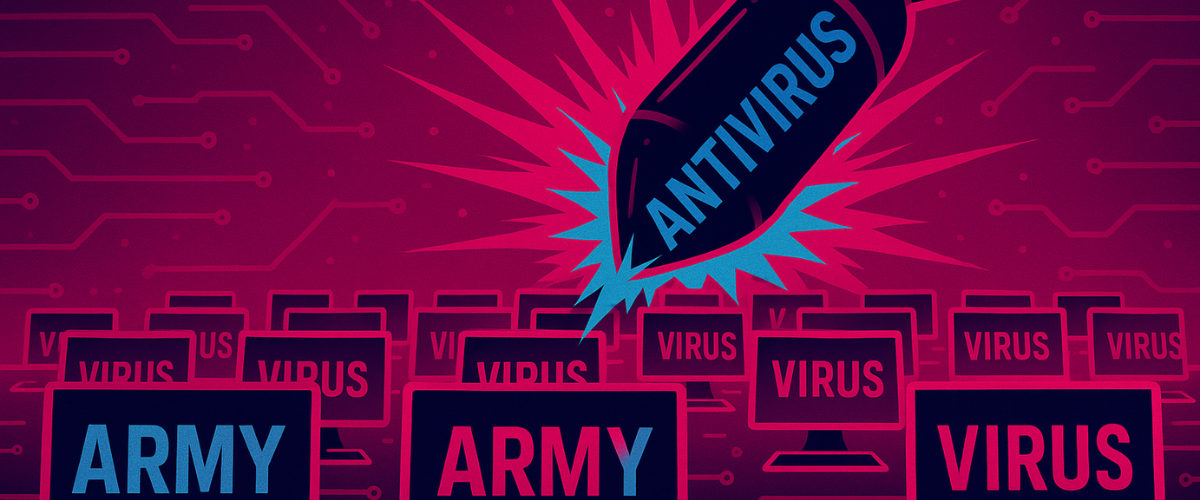
Endpoints are a firm’s front line. We deploy advanced AV and EDR to block known threats and detect suspicious behaviour. Think of this as layers: signature‑based prevention for commodity malware and behaviour‑based analytics for unknowns. When a device shows signs of compromise—unusual process spawning, persistence attempts, credential access—our SOC isolates it from the network to prevent spread. We then investigate root cause and remediate, restoring the user quickly.
Extended Detection & Response (XDR) and SIEM visibility
As firms adopt more cloud and SaaS, endpoint signals alone are not enough. We integrate endpoint telemetry with identity, email, and network logs to build a unified view—sometimes called XDR. A Security Information and Event Management (SIEM) platform correlates activity across sources and triggers playbooks. For example, if a suspicious OAuth consent happens soon after a phishing click, and we see impossible travel on the same account, automated containment can trigger before data moves.
Ransomware detection and containment
Ransomware attacks can encrypt file servers, NAS devices, and cloud sync folders in minutes. Our stack monitors for rapid file changes and known ransomware behaviours. We block the process, isolate the host, and alert analysts. Because backups are isolated and tested, clean data can be restored quickly. In tabletop exercises, we practise the communication plan so the first time is never the worst time.
Advanced email protection and anti‑phishing
Email is still the primary entry point for social engineering. We harden email with layered controls: authentication policies (SPF/DKIM/DMARC), advanced phishing filters, malware scanning, URL detonation, and impersonation protection. We also provide user‑friendly reporting buttons and feedback loops. Over time, we measure and drive down click‑through rates via awareness training and targeted simulations, emphasizing coaching over shaming.
Identity, MFA, and Zero‑Trust Network Access (ZTNA)
Identity is the new perimeter. We enforce multi‑factor authentication (MFA) everywhere feasible, with conditional access policies that consider device health, location, and user risk signals. For remote access, we favour ZTNA over legacy VPNs, granting the least access necessary and brokering connections rather than exposing networks. This reduces lateral movement and simplifies offboarding.
Vulnerability management and secure configuration
Patching is necessary but not sufficient. We maintain a continuous cycle of discovery, prioritization, remediation, and verification across operating systems, applications, and cloud services. We track misconfigurations in SaaS platforms, harden baselines, and close exposed services. Reports are written in business language with clear owners and timelines.
Proactive threat hunting
Automations catch a lot, but not everything. Our hunters look for weak signals—like a rare parent-child process chain on a CAD workstation, or a service account authenticating oddly to a storage share. We create hypotheses, test them at scale, and convert findings into new detections. Threat hunting is how we stay ahead of playbooks published by adversaries.
Dark web monitoring
Compromised credentials and leaked data frequently surface in criminal marketplaces. We monitor for your domains and high‑risk identities, triage findings, and trigger credential resets and additional controls. This reduces the window between exposure and actor action.
Digital forensics and incident response (DFIR)
When incidents occur, time matters. We collect volatile evidence, capture forensic images where needed, and analyse timelines to understand the initial access, actions on objectives, and data exposure. Findings flow into containment and eradication steps—closing holes, revoking tokens, rebuilding systems—and into executive‑level reporting for client and regulator communications.
MSP Services: Reliable IT for Professional Services Needs
Proactive system maintenance to prevent downtime
We monitor system health, patch operating systems and applications, and standardize builds. For design and analysis teams, we tune endpoints for graphics performance and reliable I/O, so large models open quickly and renders complete without errors. We track recurring issues to eliminate root causes rather than firefight.
Cloud, on‑premise, and hybrid management
Most firms blend on‑prem file servers for speed and cloud platforms for collaboration. We design architectures that balance performance with security—tiered storage, smart caching, and clear data residency. Identity is unified across environments, so access follows the user and policy, not the device or location.
Helpdesk support for staff and operations
Our service desk resolves day‑to‑day issues quickly and professionally. Engineers understand the realities of project delivery—during a tender submission, what matters most is getting the machine back in action. We escalate fast when needed and communicate in plain English. Satisfaction and time‑to‑resolution are tracked metrics, not afterthoughts.
Backup and disaster recovery (BCDR)
Backups are your last line of defence. We design 3‑2‑1‑1‑0 strategies—three copies of data, two media types, one off‑site, one immutable, and zero backup errors from regular testing. Recovery Time Objectives (RTOs) and Recovery Point Objectives (RPOs) are aligned to business tolerance. We routinely test restores for endpoints, servers, and SaaS, so when the pressure is on, we know the playbook.
Vendor and platform management
From email and identity providers to project management and accounting systems, we act as a single point of coordination. We handle renewals, licensing, and escalation paths. You gain leverage with vendors and avoid the churn of ad‑hoc decisions.
How Our Approach Maps to Engineering, Architecture, and Consulting Workflows
CAD/BIM performance and protection
Design teams need powerful workstations and fast storage, but they also need safe defaults. We harden endpoints without starving performance—controlling administrative rights, isolating risky processes, and using policies that are tuned for graphics‑heavy workloads. File servers and cloud shares are permissioned with least‑privilege and monitored for unusual access.
Version control and data integrity
Lost versions cost hours. We implement practical versioning for shared models and documents, with clear rules for check‑in/check‑out and automated safeguards against accidental overwrites. Integrity checks and change logs help resolve disputes and support claims.
Secure collaboration with clients and partners
Whether sharing models with a general contractor or reports with a corporate client, we enable secure external collaboration. Guest access is controlled and auditable. Expiry dates and watermarking reduce long‑tail exposure. We educate project managers on safe sharing practices without turning them into security admins.
Field staff and mobile productivity
Site engineers, architects, and consultants need secure access on the go. We manage mobile devices with modern management, enforce screen locks and encryption, and provide ZTNA‑based access to only what’s required. Offline scenarios are considered so work doesn’t stop when connectivity dips.
Finance and project systems
Invoicing, time capture, and project accounting are the heartbeat of a professional services firm. We protect these systems with strong authentication, role‑based access, and regular audits. We also watch for BEC patterns that target payment changes or fake vendor requests, and we build verification steps into your processes.
Compliance, Privacy, and Client Assurance
Practical alignment to regulations and client expectations
We help firms align with Canadian privacy obligations and client‑driven security requirements. Our documentation and evidence collection support due diligence responses, third‑party assessments, and audit requests. We speak the language of risk to your clients while keeping internal steps simple for staff.
Policy that people can follow
Policies matter only if they’re used. We write and maintain concise, actionable policies—acceptable use, access control, incident response, and vendor management—with clear owners and review cycles. We train staff on the “why” as much as the “what,” which increases adherence.
Third‑party and supply‑chain risk
Your risk is connected to the tools and partners you rely on. We catalogue vendors, track data flows, and assess risk. Where appropriate, we implement compensating controls or alternatives. The outcome is assurance that stands up to client scrutiny.
What Good Looks Like (and How You’ll Know It’s Working)

Fewer incidents, faster containment
Over time, phishing click rates drop, suspicious authentication attempts are blocked automatically, and endpoint isolation becomes rare. When issues appear, they’re contained in minutes, not hours. We measure Mean Time to Detect (MTTD) and Mean Time to Respond (MTTR) and report trends you can present to your board or clients.
Higher productivity and predictable operations
Users spend less time waiting for support and more time delivering. Patch windows are scheduled and communicated. Hardware lifecycles are planned. Surprise is reduced.
Clear, auditable evidence of maturity
You’ll have policy documents, training records, risk registers, asset lists, backup test results, and incident reports. When clients ask for proof, you have it—without a scramble.
Why Professional Services Companies Choose Fusion Cyber Group
- Unified IT & Cybersecurity. One partner is accountable for both uptime and protection. There’s no hand‑off friction; there’s only outcomes.
- Industry‑specific expertise. We understand the tools, workflows, and constraints common to engineering, architecture, and consulting. We tune controls for high‑performance endpoints, high‑value data, and hybrid work.
- 24/7 Monitoring. Our SOC operates around the clock. Threats don’t sleep; neither do our detections.
- Proactive approach. We prevent issues before they cause damage. Hardening isn’t a one‑time project; it’s a loop.
- Scalable service. We support firms from five to hundreds of staff. As you grow, your security posture grows with you.
As part of our commitment to professional services clients, we go beyond standard protection to ensure you’re never alone in the face of a cyber threat. Our guarantee puts us on your side of the table.
How to Engage Fusion Cyber Group
Start with a straightforward discovery. We’ll map your environment, highlight priority risks, and propose a practical path that balances speed and stability. No jargon. No scare tactics. Just a clear plan and accountable delivery.
Ready to reduce risk and protect revenue?
Featured links:
FAQ:
Do we need cyber insurance?
Cyber insurance can cover the costs associated with a data breach—legal fees, customer notification, credit monitoring and ransom payments. It isn’t a substitute for good security practices, but insurers often require a minimum level of protection (firewalls, MFA, backups). Consider a policy if handling sensitive customer data, processing payments or operating in industries with regulatory requirements. We can help you document your controls to get better premiums.
How can our employees become our first line of defence?
People are often the weakest link, but with training they can become your strongest defence. Offer short, regular sessions covering:
- How to identify phishing scams and social engineering.
- Password best practices and how to use a password manager.
- Secure handling of customer data and personal information.
- Safe use of company devices (e.g., don’t install unauthorized software, lock screens when away).
- Incident reporting protocols so suspicious activity is escalated quickly.
We include ongoing security awareness training for all client employees, delivered in everyday language that non-tech staff understand.
What if we already have some tools in place?
Perfect. We integrate with what makes sense, retire what doesn’t, and avoid tool sprawl. The outcome is simpler and stronger.
How fast can you start?
Discovery can begin quickly. We prioritize the first hardening steps so you see risk reduction early.
Problem
Professional services firms face targeted phishing, business email compromise (BEC), ransomware, and SaaS misconfigurations while juggling remote teams and complex project data.
Impact
Downtime kills billable hours, exposes client IP, and damages trust; regulatory penalties and contract risk follow.
Solution
Fusion Cyber’s unified MSSP + MSP model delivers 24/7 detection and response, Zero Trust access, hardened endpoints, resilient backups, and proactive IT operations engineered for your workflows.
Consequence
Firms that standardize on this model see fewer incidents, faster recovery, predictable OPEX, and higher client confidence—while those that don’t face rising frequency, severity, and cost of disruption.
Our Cybersecurity Guarantee
“At Fusion Cyber Group, we align our interests with yours.“
Unlike many providers who profit from lengthy, expensive breach clean-ups, our goal is simple: stop threats before they start and stand with you if one ever gets through.
That’s why we offer a cybersecurity guarantee: in the very unlikely event that a breach gets through our multi-layered, 24/7 monitored defenses, we will handle all:
threat containment,
incident response,
remediation,
eradication,
and business recovery—at no cost to you.
Ready to strengthen your cybersecurity defenses? Contact us today for your FREE network assessment and take the first step towards safeguarding your business from cyber threats!